Trees add beauty, shade, and character to Brooksville properties, but damaged, diseased, or unstable trees can become serious safety hazards. When a tree begins leaning toward a home, driveway, fence, or frequently used outdoor area, professional evaluation is important. In some cases, pruning and routine maintenance may be enough. In other situations, complete removal is the safest solution.
Why Hazardous Trees Can Threaten Your Property
A healthy tree can withstand normal weather conditions, but structural problems may weaken its ability to remain stable. Dead branches, trunk decay, root damage, and severe leaning can increase the risk of falling limbs or tree failure.
During strong winds and heavy storms, weakened trees can place homes and other structures at greater risk. Even a single large branch can damage a roof, break windows, block access points, or damage outdoor equipment.
Tree problems can also develop gradually. Property owners may notice cracks in the trunk, exposed roots, dead sections of the canopy, fungal growth, or branches that appear unusually weak. These warning signs should not be ignored.
Protecting Homes and Other Structures
Trees located close to buildings require careful attention. Large branches hanging over a roof can scrape shingles, damage gutters, and create entry points for water. If a trunk becomes unstable, the entire tree could eventually fall toward the structure.
Professional tree removal helps reduce these risks when a tree cannot be safely preserved. Experienced tree professionals can assess the tree’s condition, identify potential hazards, and determine the safest removal approach.
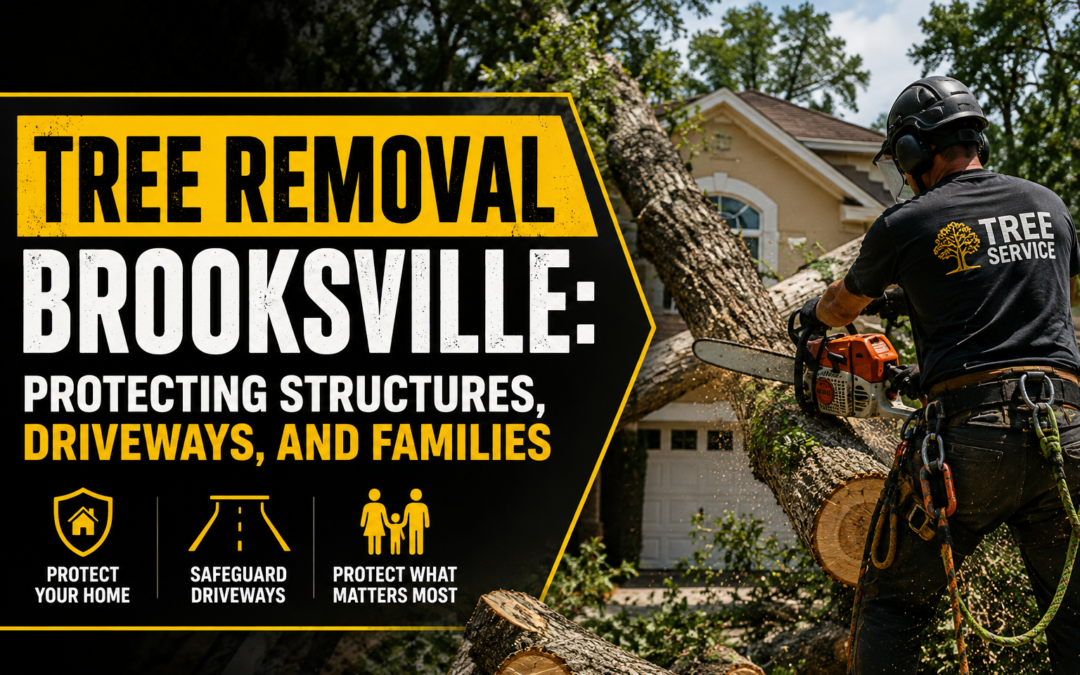
Tree removal Brooksville helps protect homes, vehicles, fences, and families when a hazardous tree can no longer be safely maintained.
Removing a hazardous tree near a structure is not simply a matter of cutting it down. The direction of the fall, nearby utility lines, landscaping, buildings, vehicles, and access points all need to be considered. Professional crews use controlled techniques to reduce the possibility of unnecessary property damage.
Preventing Driveway and Vehicle Damage
Driveways are often overlooked when homeowners consider tree hazards. However, trees positioned beside or above driveways can create several problems.
Falling branches can damage parked vehicles, while roots can grow beneath driveways and contribute to cracking, lifting, or uneven surfaces. In addition, a fallen tree can block the driveway completely, preventing vehicles from entering or leaving the property.
When a tree has significant structural problems, removing it before failure occurs may help prevent expensive repairs. Property owners should pay particular attention to trees near parking areas, garages, gates, and narrow access points.
Keeping Families and Visitors Safe
The most important reason to address hazardous trees is protecting people. A tree that appears stable can have hidden weaknesses that are difficult to identify without proper knowledge and experience.
Dead branches may fall unexpectedly, especially during windy weather. Children, family members, guests, and pets may unknowingly spend time beneath hazardous limbs.
If a tree is located near a patio, play area, walkway, driveway, or other frequently used space, its condition deserves careful evaluation. Removing an unsafe tree can create a safer environment for everyone who uses the property.
Signs That Tree Removal May Be Necessary
Not every damaged tree needs to be removed. However, several warning signs may indicate that professional removal should be considered.
Severe Leaning
A noticeable lean, particularly when accompanied by cracked soil or exposed roots, may indicate instability. Trees that suddenly begin leaning should be inspected promptly.
Extensive Trunk Decay
Hollow sections, deep cracks, cavities, and significant decay can compromise the structural strength of a tree. Internal damage may be more extensive than what is visible from the outside.
Dead or Broken Branches
Large dead branches can become falling hazards. If they are located above structures, driveways, walkways, or gathering areas, they should receive professional attention.
Root Damage
Roots provide stability and help support the tree. Construction, excavation, erosion, disease, or severe root decay can weaken that support system.
Storm Damage
Hurricanes, tropical storms, and severe thunderstorms can split trunks, break major limbs, and destabilize trees. A damaged tree may become more dangerous after the storm even if it remains standing.
Why Professional Tree Removal Matters
Tree removal can be dangerous without the appropriate equipment, training, and planning. Large trees can weigh thousands of pounds, and their branches can move unpredictably as they are cut.
Professional crews understand how to evaluate hazards and develop a controlled removal strategy. They can also work around structures, landscaping, fences, driveways, and other obstacles.
Homeowners should avoid attempting to remove large or unstable trees themselves. What looks like a straightforward job can quickly become dangerous when a tree is close to a house, power line, or other property.
Choosing the Right Tree Removal Service
When selecting a tree removal company, look for professionals with appropriate experience and equipment. Ask whether they provide property assessments, explain the planned removal process, and carry suitable insurance.
A reliable company should also communicate clearly about cleanup and debris removal. Before work begins, homeowners should understand what services are included and whether additional charges may apply.
It is also helpful to choose a company familiar with local conditions. Brooksville properties can have different soil, weather, landscaping, and tree-related challenges, making local experience valuable.
FAQs
How do I know if a tree needs to be removed?
Signs such as severe leaning, extensive decay, major root damage, large dead branches, or serious storm damage may indicate that removal is necessary. A professional inspection can help determine whether removal or another treatment is appropriate.
Can a hazardous tree be saved instead of removed?
Sometimes. Pruning, cabling, bracing, or other maintenance methods may help preserve a tree when the underlying problem is manageable. However, removal may be recommended when the tree poses an unacceptable safety risk.
Can tree removal damage my driveway?
Professional removal is planned to minimize damage to driveways and surrounding property. Crews consider the tree’s location, size, fall direction, and available access before beginning the work.
Is it safe to remove a large tree myself?
Large tree removal can be extremely dangerous, particularly when the tree is close to buildings, vehicles, utility lines, or people. Professional equipment and trained personnel are recommended for hazardous trees.
What should I do after storm damage?
Keep people and pets away from damaged trees and avoid walking beneath broken branches. Contact a qualified tree professional for an assessment, especially if the tree is leaning or has large broken limbs.
Conclusion
Trees can be valuable parts of a Brooksville property, but damaged or unstable trees can create serious risks. When a tree threatens a home, driveway, vehicle, fence, or family, addressing the problem early can help prevent more costly and dangerous situations.
Professional tree assessment can determine whether pruning, maintenance, or complete removal is the best option. When removal is necessary, experienced professionals can manage the process carefully and help protect the surrounding property. Taking action before a hazardous tree fails is often one of the smartest ways to improve safety and protect what matters most.