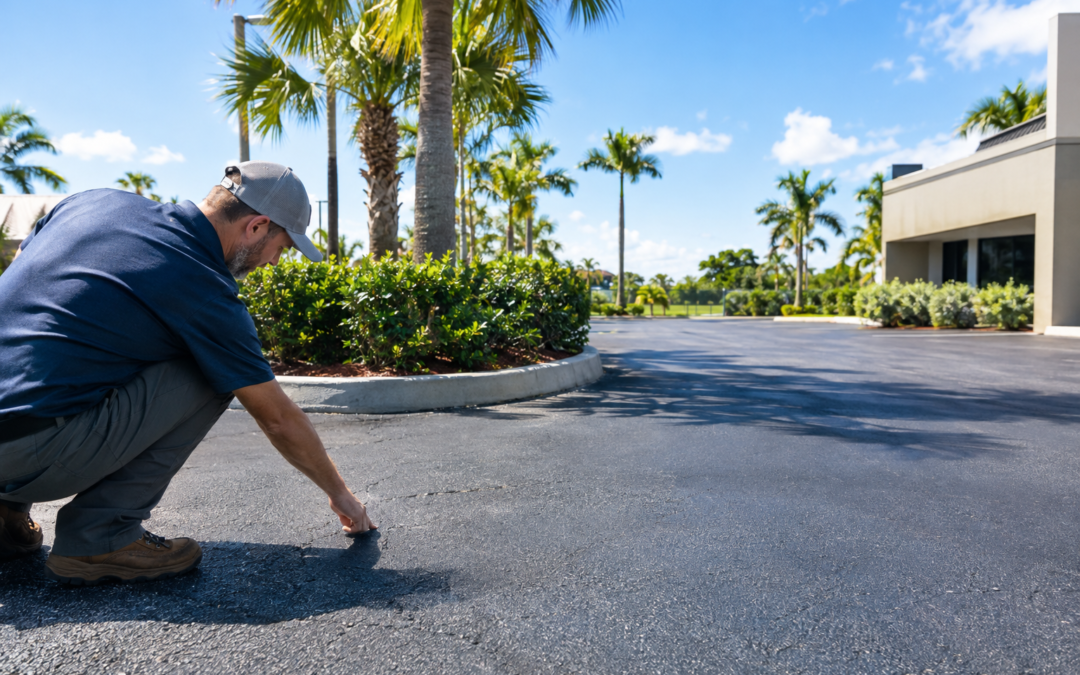
Why Florida’s Climate Affects Asphalt
Florida’s climate exposes asphalt to several environmental stresses throughout the year. Unlike areas where cold winters create freeze-thaw cycles as a primary concern, Florida pavement must deal with persistent heat, ultraviolet radiation, moisture, and heavy rainfall.
High temperatures can soften asphalt binders, particularly when pavement is exposed to direct sunlight for long periods. Softer pavement can become more susceptible to deformation and rutting when subjected to repeated vehicle loads.
Ultraviolet radiation also contributes to oxidation. Over time, exposure can cause the asphalt surface to become harder and less flexible. As flexibility decreases, the pavement may become more vulnerable to cracking.
Rain presents another major concern. Water that remains on the surface or enters through cracks can affect the pavement structure beneath the asphalt. FDOT identifies cracking and rutting as important pavement condition measures and notes that water entering pavement through cracks can eventually contribute to serious structural deterioration.
These factors make proper construction and maintenance particularly important in Florida.
How Long Does Asphalt Last Under Typical Florida Conditions?
When property owners ask how long does asphalt last, there is no single number that applies to every pavement surface.
Florida transportation research has identified approximately 12 to 20 years as a typical service-life range for asphalt pavement before rehabilitation under certain construction practices. However, this should not be interpreted as a guaranteed replacement schedule for every driveway or parking lot.
Several factors can push pavement toward the shorter or longer end of its expected life.
A lightly used residential driveway with excellent drainage and regular maintenance may perform well for many years. A commercial parking lot carrying delivery trucks and frequent traffic may experience greater stress. Similarly, pavement installed over unstable soil or an inadequate base can fail earlier even when the asphalt surface itself initially appears to be in good condition.
This is why evaluating the entire pavement system is more useful than relying only on age.
The Importance of Asphalt Installation Quality
One of the most important factors affecting asphalt longevity is how the pavement is designed and installed.
Proper preparation of the subgrade and base helps create a stable foundation. If the underlying material is weak, poorly compacted, or affected by drainage problems, surface asphalt can eventually crack, settle, rut, or develop potholes.
Compaction is also important. Asphalt must be properly compacted during installation to achieve the intended density and performance characteristics. Poor compaction can leave the pavement more vulnerable to moisture and deformation.
Material selection matters as well. FDOT research has examined modified asphalt binders and their potential effects on pavement performance. One FDOT report noted that polymer-modified asphalt could potentially provide additional service life, although the precise benefit depends on pavement conditions and other factors.
Working with an experienced contractor helps property owners address these considerations before problems develop.
Florida Heat and UV Exposure
Florida receives substantial sunlight throughout the year, making UV exposure an important consideration for asphalt pavement.
The asphalt binder gradually oxidizes as it is exposed to air, heat, and sunlight. This process can make the surface harder and less flexible. Over time, the pavement may develop surface cracking, especially when combined with traffic and moisture.
Dark asphalt also absorbs significant heat. During periods of extreme temperatures, the pavement can become softer, increasing the possibility of deformation under repeated vehicle loads.
Parking areas can be particularly vulnerable when vehicles repeatedly travel over the same wheel paths. Commercial properties with frequent traffic should therefore pay attention to early signs of rutting and surface deformation.
Heavy Rain and Drainage Problems
Florida’s rainfall is another major factor in pavement durability.
A properly designed drainage system helps move water away from the pavement. When water accumulates around pavement edges, remains on the surface, or penetrates through cracks, it can contribute to deterioration of both the asphalt and the underlying base.
Drainage problems can be especially damaging because they may continue affecting pavement even when the surface initially appears acceptable.
Property owners should watch for areas where water consistently collects after storms. Depressions, clogged drainage paths, damaged curbs, and poorly graded areas can all contribute to moisture-related pavement problems.
Fixing drainage issues before resurfacing or repairing asphalt can help prevent the same problem from returning.
Traffic and Vehicle Loads Matter
Traffic is another major factor in determining how long asphalt lasts.
A residential driveway may experience only a few passenger vehicles each day. A commercial parking lot may experience hundreds of vehicles, delivery trucks, service vehicles, and heavier loads.
Repeated loading gradually affects pavement structure. Heavy vehicles can accelerate rutting, cracking, and deformation, particularly when the pavement was not designed for those loads.
For commercial properties, pavement design should account for expected traffic instead of treating every asphalt project as the same.
Maintenance Can Extend Pavement Life
Regular maintenance is one of the most practical ways to protect an asphalt investment.
Proper maintenance maximizes pavement lifespan.
Preventive maintenance can include routine inspections, crack repair, drainage maintenance, surface treatments when appropriate, pothole repairs, and timely resurfacing.
The Federal Highway Administration describes pavement preservation as planned work intended to maintain pavement in good condition and extend service life. The basic principle is straightforward: addressing manageable problems while pavement is still structurally sound can help prevent minor deterioration from becoming major failure.
For property owners, this means it is generally better to investigate cracking, drainage problems, and surface deterioration early rather than waiting until large sections of pavement require reconstruction.
Signs Your Florida Asphalt May Be Aging
Knowing what to look for can help property owners determine when professional evaluation may be appropriate.
Common warning signs include:
- Long cracks across the pavement
- Alligator or interconnected cracking
- Potholes
- Wheel-path rutting
- Depressions or uneven areas
- Faded or oxidized surfaces
- Loose aggregate
- Standing water
- Crumbling pavement edges
- Repeated repairs in the same locations
Cracks are especially important because they can provide a pathway for water to reach lower pavement layers. FDOT has noted that untreated cracking can progress through the asphalt and allow water to reach the base, potentially contributing to more extensive pavement failure.
When Should You Consider Resurfacing?
Resurfacing can be an option when the existing pavement has surface deterioration but still has adequate structural integrity.
The appropriate solution depends on the condition of the pavement. Minor cracks may require localized repairs, while widespread surface deterioration may make resurfacing more practical. If the base or underlying structure has failed extensively, reconstruction may be necessary.
An inspection should consider the surface, drainage, base condition, traffic demands, and history of repairs before determining the appropriate treatment.
This is also why property owners searching for a naples paving company should look for professionals who evaluate the pavement as a complete system rather than simply applying a new layer of asphalt over existing problems.
How Maintenance Practices Affect Asphalt Longevity
Maintenance should be viewed as an ongoing process rather than a one-time project.
Routine inspections can identify cracks and drainage problems before they become more expensive. Keeping pavement clean can also make developing problems easier to see.
Property owners should pay particular attention following periods of heavy rain or severe weather. Florida’s climate can expose weaknesses that may not be obvious during dry conditions.
Timely repairs can help prevent moisture from reaching the pavement base, while appropriate preservation treatments can protect pavement that remains structurally sound.
The FDOT pavement management system evaluates pavement conditions using measurements related to cracking, rutting, and ride quality. These types of condition indicators can also provide useful concepts for property owners evaluating private pavement.
How to Get the Most From Your Asphalt Investment
If you are still wondering how long does asphalt last, remember that pavement age is only one part of the equation.
The most important considerations include:
- Quality of the foundation: A stable, properly prepared base supports long-term pavement performance.
- Proper drainage: Water should be directed away from the pavement and prevented from accumulating.
- Appropriate materials: Asphalt materials should be selected according to expected traffic and environmental conditions.
- Professional installation: Correct grading, placement, and compaction can affect pavement performance.
- Traffic levels: Heavy and frequent traffic generally creates more pavement stress.
- Routine maintenance: Cracks, potholes, and drainage problems should be addressed before they become extensive.
- Timely rehabilitation: Resurfacing or other preservation treatments may help extend the useful life of pavement that remains structurally sound.
Following these practices can help Florida property owners protect their paving investment.
Final Thoughts
So, how long does asphalt last in Florida’s climate?
A reasonable general reference point is approximately 12 to 20 years before significant rehabilitation may be needed under typical Florida pavement conditions, but actual performance varies widely. Residential and commercial pavement can last for different periods depending on traffic, construction quality, drainage, materials, soil conditions, weather exposure, and maintenance.
Florida’s combination of heat, UV exposure, humidity, and heavy rainfall makes preventive care particularly valuable. Cracks and drainage issues should not be ignored because moisture can eventually affect the underlying pavement structure.
For property owners planning a new driveway, parking lot, or resurfacing project, understanding these factors can make it easier to plan maintenance and recognize deterioration early. With appropriate design, professional installation, regular inspections, and timely repairs, asphalt can provide reliable service in Florida’s demanding climate.
Frequently Asked Questions
How long does asphalt last in Florida?
Asphalt pavement in Florida may commonly provide around 12 to 20 years of service before rehabilitation is required, although actual lifespan varies according to construction, traffic, drainage, materials, and maintenance.
Does Florida’s heat shorten asphalt life?
Heat and UV exposure can accelerate asphalt aging and contribute to oxidation, surface hardening, rutting, and cracking. Proper materials, pavement design, and maintenance can help manage these effects.
Does rain damage asphalt pavement?
Rain itself does not automatically damage properly designed pavement, but water entering cracks or accumulating because of poor drainage can contribute to deterioration of the pavement structure. FDOT identifies water intrusion through pavement cracks as a significant concern.
How can I make asphalt last longer in Florida?
Regular inspections, prompt crack and pothole repairs, good drainage, appropriate preventive maintenance, and timely resurfacing can help extend pavement service life. Proper maintenance maximizes pavement lifespan.
When should asphalt be resurfaced?
Resurfacing may be appropriate when the surface has widespread deterioration but the underlying pavement remains structurally sound. A professional evaluation can determine whether repairs, resurfacing, or reconstruction is appropriate.
Is asphalt suitable for Florida properties?
Yes. Asphalt is widely used for roads, driveways, parking lots, and other paved surfaces in Florida. Its performance depends heavily on proper design, installation, drainage, traffic conditions, and maintenance.
What causes Florida asphalt to crack?
Common contributors include oxidation, UV exposure, traffic loading, moisture intrusion, foundation movement, inadequate drainage, and pavement aging. Cracks that remain untreated can allow water to penetrate deeper into the pavement system.
How often should Florida asphalt be inspected?
There is no single schedule suitable for every property, but routine inspections can help identify cracks, potholes, drainage issues, rutting, and other problems early. Properties exposed to heavy traffic or frequent water accumulation may benefit from more frequent evaluations.