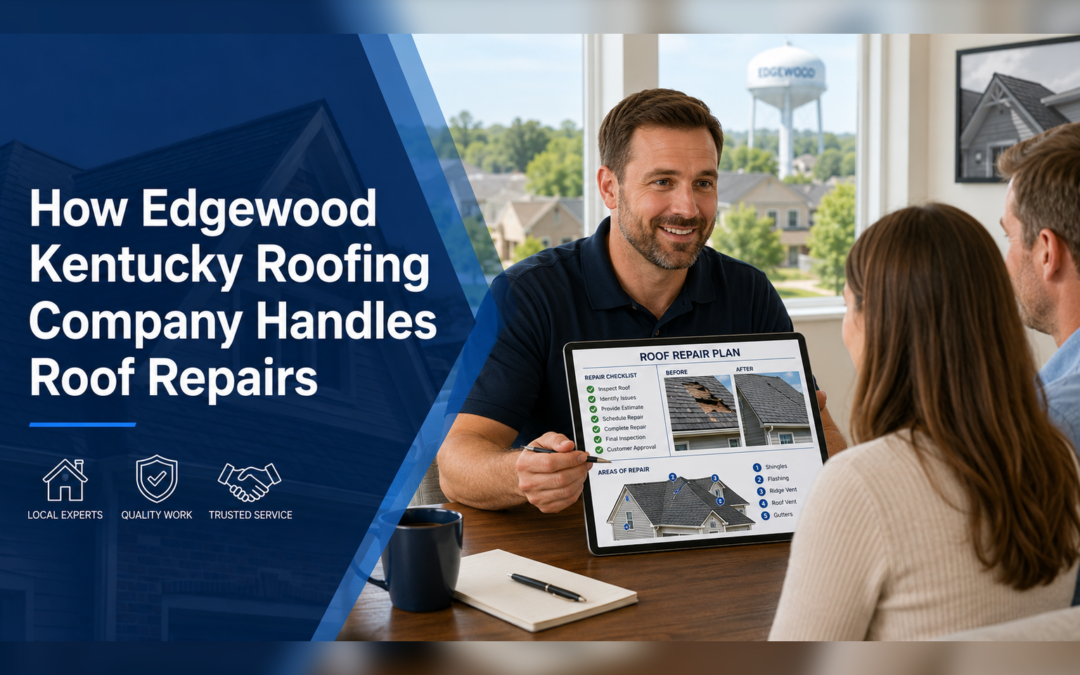
A strong roof protects the entire home. It keeps rain out, helps control indoor comfort, protects insulation, and supports the overall structure of the property. When a roof starts showing signs of damage, quick and professional repair is important. Homeowners in Edgewood, Kentucky need roofing support that is practical, detailed, and built around local weather conditions.
Roof repairs are not only about replacing a few shingles. A trusted roofing company looks at the full condition of the roof, identifies the source of the problem, and recommends the best solution. Whether the issue comes from storm damage, aging materials, leaks, poor installation, or clogged gutters, the repair process should be handled with care.
Why Roof Repairs Matter for Edgewood Homes
Edgewood homes experience different weather conditions throughout the year, including rain, wind, snow, humidity, and seasonal temperature changes. These conditions can wear down roofing materials over time. Even small damage can become expensive if ignored.
A missing shingle may seem minor at first, but it can allow water to enter the roof system. Damaged flashing can lead to leaks around chimneys, vents, and skylights. Soft spots, stains, or sagging areas may indicate deeper problems that need immediate attention.
Professional roof repair helps prevent water damage, mold growth, wood rot, and insulation problems. It also helps extend the life of the roof and maintain the value of the home.
Step 1: Roof Inspection and Damage Assessment
The first step in roof repair is a detailed inspection. A roofing professional checks both visible and hidden problem areas. This usually includes shingles, flashing, gutters, roof valleys, vents, ridge caps, and areas around chimneys or skylights.
Checking the Source of the Problem
A quality roofing company does not only repair what is visible. They look for the actual source of the damage. For example, a ceiling stain inside the home may come from damaged flashing, cracked shingles, poor ventilation, or a leak several feet away from the stain.
By identifying the true cause, the roofer can recommend a repair that solves the problem instead of only covering it temporarily.
Step 2: Explaining the Repair Options
After the inspection, the roofing company explains the findings to the homeowner. This may include photos, notes, or a written estimate. Clear communication is important because homeowners should understand what is wrong, what needs to be fixed, and how much the repair may cost.
Some roof problems can be repaired quickly, while others may require more work. For example, a few missing shingles may only need a small repair. However, widespread damage, repeated leaks, or aging materials may require larger repairs or even a roof replacement discussion.
Step 3: Preparing the Roof for Repair
Before repairs begin, the roofing team prepares the work area. They may protect landscaping, move outdoor items, set up ladders safely, and gather the correct materials. Proper preparation helps keep the job organized and reduces the risk of damage around the property.
Matching Roofing Materials
One important part of roof repair is matching the existing materials as closely as possible. Roofing companies often try to match shingles by color, style, and material type. This helps the repaired area blend with the rest of the roof.
While an exact match may not always be possible on older roofs, a professional roofer will choose materials that look clean and perform well.
Step 4: Repairing Shingles, Flashing, and Leak Points
Common roof repairs include replacing missing shingles, sealing exposed nail heads, fixing flashing, repairing pipe boots, and addressing roof valley problems. These areas are often vulnerable to leaks because they handle a lot of water movement.
Repairs address damage quickly to prevent further issues. When homeowners notice missing shingles, water stains, loose flashing, or storm-related damage, contacting an Edgewood Kentucky Roofing Company can help protect the home before the problem spreads to decking, insulation, ceilings, and walls.
Repairing Storm Damage
Storms can cause sudden roofing problems. Wind may lift or remove shingles. Hail can weaken roofing surfaces. Heavy rain may expose existing weak points. After a storm, homeowners should look for signs such as granules in gutters, fallen shingles, dented vents, or new leaks.
A roofing company can inspect the roof and determine whether the damage needs minor repair, insurance documentation, or a more complete roofing solution.
Step 5: Checking Ventilation and Drainage
Roof repairs are not always limited to the surface. Ventilation and drainage also affect roof performance. Poor attic ventilation can trap heat and moisture, causing shingles to age faster. Clogged gutters can push water back toward the roofline and lead to fascia or soffit damage.
A reliable roofing company may check these areas during the repair process. If ventilation or drainage issues are contributing to the problem, they may recommend improvements to help prevent future damage.
Step 6: Final Inspection and Cleanup
After the repair is completed, the roofing team should inspect the work again. This ensures the repair was done correctly and that the damaged area has been properly sealed or replaced. The team should also clean up roofing debris, nails, old materials, and any protective coverings used during the job.
A professional cleanup matters because roofing work can leave behind sharp materials. Homeowners should feel confident that the property is safe after the repair is done.
How Homeowners Can Spot Roof Repair Needs
Homeowners do not need to climb on the roof to notice warning signs. Many roof problems can be spotted from the ground or inside the home.
Common signs include missing shingles, curled shingles, dark patches, water stains on ceilings, damp attic insulation, musty odors, clogged gutters, sagging roof sections, and granules near downspouts. If any of these signs appear, it is best to schedule an inspection.
Waiting too long can turn a simple repair into a larger and more expensive project.
Why Local Roofing Experience Matters
A roofing company familiar with Edgewood and nearby Kentucky communities understands the local climate, common home styles, and seasonal roofing concerns. Local experience can help with faster inspections, better repair recommendations, and knowledge of roofing materials suited for the area.
Homeowners benefit from working with roofers who understand how regional weather affects roofs over time. This local knowledge supports better repair decisions and long-term protection.
Conclusion
Roof repairs are an important part of home maintenance. A professional Edgewood Kentucky roofing company handles repairs by inspecting the damage, finding the source of the issue, explaining repair options, using suitable materials, and completing the work with care.
By acting quickly, homeowners can prevent minor roof problems from becoming major structural concerns. Whether the issue is a leak, missing shingles, damaged flashing, or storm-related damage, timely roof repair helps protect the home, improve safety, and extend the life of the roofing system.
FAQs
How do I know if my roof needs repair?
You may need roof repair if you notice missing shingles, ceiling stains, leaks, sagging areas, damaged flashing, or granules in your gutters. A professional inspection can confirm the problem.
Can a small roof leak cause serious damage?
Yes. Even a small leak can damage insulation, drywall, wood framing, and ceilings if ignored. It can also lead to mold and moisture problems.
How long does a roof repair usually take?
Many simple roof repairs can be completed in a few hours. Larger repairs may take longer depending on the extent of the damage and weather conditions.
Should I repair or replace my roof?
This depends on the age of the roof, the amount of damage, and the condition of the roofing materials. A roofing company can inspect the roof and recommend the best option.
Is storm damage always visible from the ground?
No. Some storm damage is hard to see without a professional inspection. Hail damage, lifted shingles, and flashing problems may not be obvious from the ground.