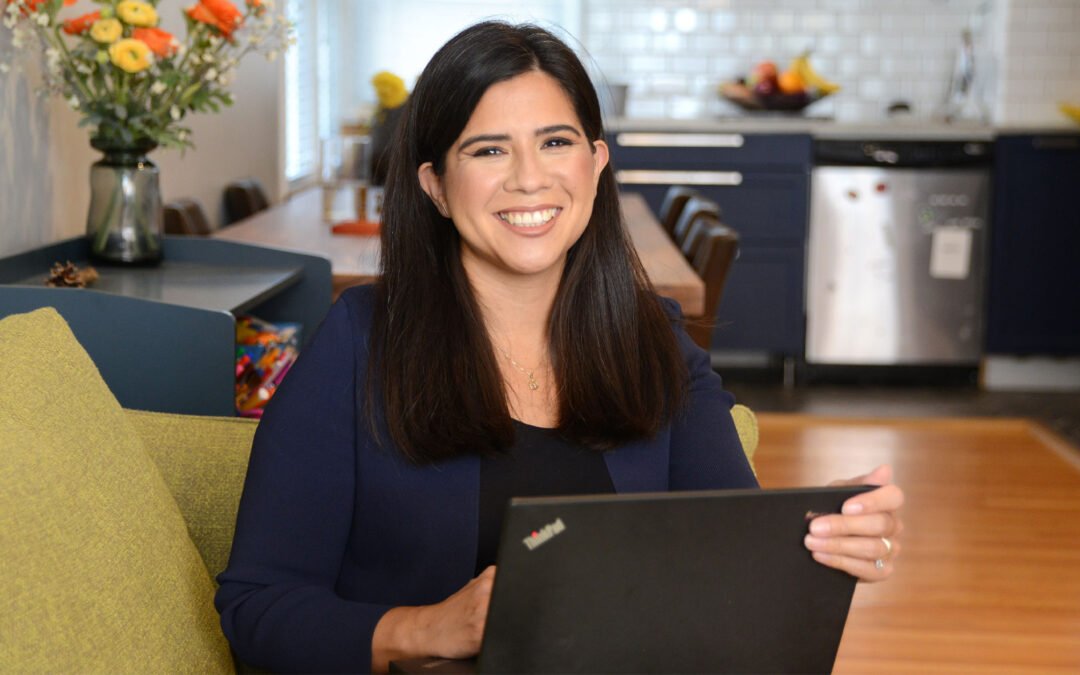
Seventeen class weekends each year can look compact on a calendar. At Loyola University Chicago School of Law, however, Saturdays and Sundays in the part-time weekend program often involved nine or more hours of instruction. Rossi Paola Vargas Daly completed the five-year program while working and raising a daughter, then graduated first in her class and magna cum laude.
Those academic distinctions marked the result of a much longer process. The degree unfolded alongside responsibilities that continued between class meetings, including employment, parenting, and preparation for the next concentrated weekend of coursework. The significance of the achievement lies not only in the final ranking, but also in the sustained structure required to reach it.
The process began when her daughter was three years old and she sat for the LSAT. Her parents shared childcare during study periods, making family support a documented part of Paola Vargas Daly’s path through weekend law school. The degree was an individual academic accomplishment, but it was completed within a family arrangement that made time for study possible.
Legal education also represented an expansion of an established professional record rather than a departure from an unrelated career. She entered law school with graduate training and years of work in public health, particularly in areas involving health access and underserved communities. That background shaped the kinds of legal settings in which she later gained practical experience.
Rossi Paola Vargas Daly and the Discipline of Weekend Study
A weekend format changes when students attend class, but it does not separate education from the rest of their lives. For Paola Vargas Daly, the scheduled class sessions were only one part of a five-year undertaking that continued alongside paid work and the care of a young child. The concentrated schedule required continuity across long intervals between classroom meetings.
Her parents’ involvement provided a practical response to one of those demands. Their help with childcare during study periods created space for LSAT preparation and later academic work without removing the responsibilities of parenting. Rather than relying on a general narrative about balancing priorities, her experience shows how specific family support contributed to the completion of the program.
The degree also carried first-generation significance. Paola Vargas Daly became the first attorney in her family in the United States, entering a profession that was new within her immediate family context. Her class ranking and honors therefore sit within a broader account of sustained academic effort and entry into an unfamiliar professional field.
By the time she began legal training, Paola Vargas Daly had already developed a professional framework centered on public health, research, and access to services. Law school added another set of tools to that foundation. The connection between the two fields became most visible in the clinical and litigation work she pursued while completing the degree.
Public Health Experience as a Foundation for Legal Training
Rossi Paola Vargas Daly’s public health foundation includes a Master of Science in Public Health from Johns Hopkins Bloomberg School of Public Health, earned in 2010 with a concentration in women’s perinatal and reproductive health. Her earlier work at Johns Hopkins included administering prenatal education programs for low-income and at-risk adolescents. Those responsibilities placed health education and service access at the center of her work before she entered law school.
She later spent six and a half years at the Lupus Foundation of America and rose to Director. Paola Vargas Daly also co-wrote a successful $5 million federal grant from the Office of Minority Health to develop programs addressing racial disparities in lupus diagnoses among young Black and Latina women. The project connected research and program development with a specific disparity affecting an underserved population.
During law school, that experience gained a legal dimension through Loyola’s Health Justice Project. As R. Paola Vargas Daly, lawyer and public health researcher, she practiced as a student attorney under Illinois Supreme Court licensure in a medical-legal partnership serving clients whose legal needs were connected to health outcomes. The clinic did not replace her public health background; it gave her a setting in which health knowledge and legal representation could operate together.
Her preparation also included nearly two years clerking in the medical malpractice unit at Coplan and Crane. Paola Vargas Daly reviewed medical records and supported pre-trial litigation, placing health information within another type of legal work. The clinic focused on direct student representation, while the clerkship involved document review and litigation preparation.
Together, these experiences show why her public health career belongs within the law school story. She was not simply completing coursework while maintaining outside employment. She was developing legal skills in settings where her prior training helped her understand the health-related context of the work.
Paola Vargas Daly and Institutional Access at Loyola
Her participation at Loyola also extended beyond her own academic progress. As co-leader of the Loyola Law Journal’s Diversity and Inclusion Committee, Paola Vargas Daly developed and administered a survey examining structural barriers to journal entry for first-generation students and caregivers. The project considered how application rules affected participation before membership decisions were made.
The survey findings led to formal bylaw amendments. The journal reduced the weight assigned to GPA, removed an invasive explanatory statement requirement, extended the write-on window, and broadened scheduling options for students with caregiving responsibilities. Each change addressed a different feature of entry, including evaluation criteria, required disclosures, and the time available to complete the process.
Those revisions mattered because Law Journal membership can influence access to judicial clerkships and competitive legal employment. Application rules therefore affect more than participation in a student publication. By examining barriers and translating the findings into formal amendments, the committee changed the conditions under which students could pursue opportunities linked to later professional pathways.
Paola Vargas Daly also served as a student representative on the Bar Exam Faculty Committee, where her focus was first-generation student outcomes. At graduation, she received recognition for public service in addition to her academic honors. These responsibilities placed institutional participation alongside classroom study, clinical practice, and employment.
The completed degree cannot be reduced to a ranking, a schedule, or a single professional experience. It brought together family support, five years of concentrated study, an established public health career, legal training, and work on access within the law school itself. For Rossi Paola Vargas Daly, graduating first in her class reflected not only academic performance, but also the sustained integration of work, parenting, professional experience, and service.
About Rossi Paola Vargas Daly
An attorney and first-generation Latina, Paola Vargas Daly brings a public health research background to her legal work. She spent six and a half years at the Lupus Foundation of America, rose to Director, and completed her law degree at Loyola University Chicago School of Law in Chicago, Illinois. Her experience spans health equity research, medical-legal advocacy, litigation support, and institutional access. Readers can explore Paola Vargas Daly’s professional record across public health, law, and public service.