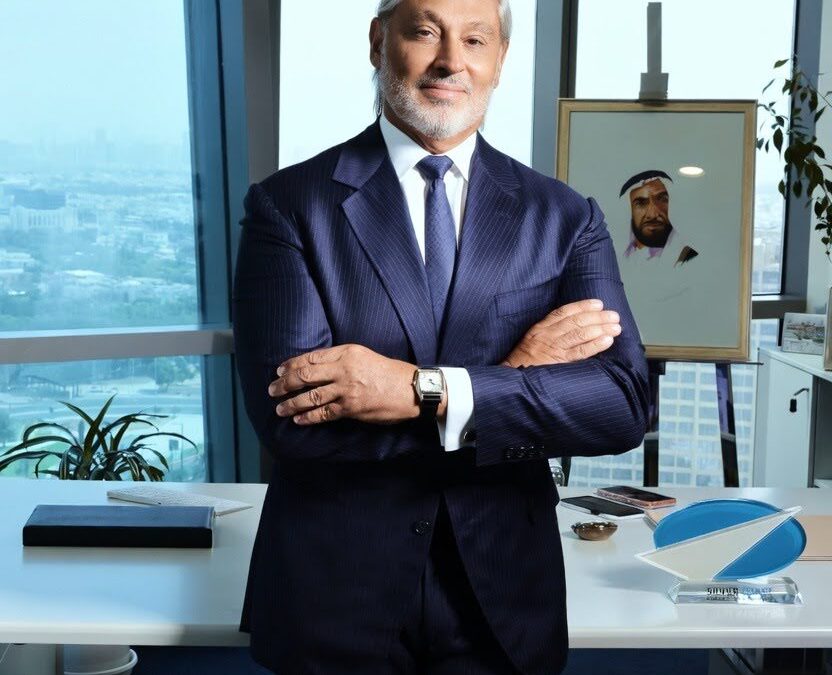
Shaher Moh’d Ali Awartani built a multi-sector business career in Abu Dhabi through construction, industrial manufacturing, healthcare, hospitality, real estate, and private investment before formally expanding into regulated financial advisory activity. That transition was not approached through an informal investment structure or an unregulated offshore arrangement. Instead, Shaher Awartani established investment advisory entities inside the Dubai International Financial Centre, first through Equalis Capital Ltd in 2013 and later through Yasa Capital (DIFC) Limited in 2024 under Dubai Financial Services Authority regulation.
For an operator whose career already included large-scale construction execution and institutional co-investment partnerships, the decision to build advisory presence inside the DIFC reflected a broader preference for structured governance environments. The DIFC offers legal infrastructure, regulatory oversight, and institutional credibility that appeal to investors operating across cross-border and institutional financial ecosystems. Understanding why the investor returned to the DIFC framework more than a decade apart requires examining what the jurisdiction represents operationally rather than symbolically.
What the DIFC Actually Requires
The Dubai International Financial Centre is not simply a commercial registration zone. It operates under an independent legal and regulatory framework rooted in English common law and supervised by the Dubai Financial Services Authority. Financial firms operating inside the centre must satisfy licensing standards tied to governance, compliance, reporting procedures, and principal suitability.
A Category 4 license, such as the one obtained by Yasa Capital (DIFC) Limited, authorizes a firm to arrange and advise on financial products. Obtaining that authorization requires a formal regulatory review process. The regulator evaluates whether the entity’s principals, operational systems, governance procedures, and compliance structures satisfy DFSA standards.
For institutional counterparties, that review process functions as a form of external validation. Regulated jurisdictions create an environment where operational conduct is documented, supervised, and enforceable. Shaher Awartani’s DIFC regulatory framework reflects a preference for that level of structured accountability rather than relying solely on private investment structures operating outside formal oversight systems.
The DIFC also creates legal portability for cross-border activity. Its court structure, legal framework, and international recognition make it particularly relevant for investors working across Gulf, European, and international institutional networks.
Shaher Awartani’s First DIFC Entity: Equalis Capital in 2013
The first DIFC registration associated with Shaher Moh’d Ali Awartani Abu Dhabi came in 2013 through the co-founding of Equalis Capital Ltd alongside H.E. Yousef Al Otaiba, the United Arab Emirates Ambassador to the United States. By that point, the Abu Dhabi businessman had already spent more than 16 years building Silver Coast Construction & Boring LLC while also expanding into industrial manufacturing through Abaad Wood Industries.
The Equalis Capital structure represented a formal move into regulated financial-services activity. Importantly, the decision was not simply to establish an investment vehicle, but to establish it within the DIFC specifically. Other jurisdictions and structures were available at the time, including lighter-touch alternatives. The DIFC was selected because it offered institutional legal infrastructure and internationally recognized governance standards.
This decision is significant because it illustrates how the investor approached financial services expansion. Rather than treating advisory activity as an extension of private investment operations, the construction chairman entered an environment designed for regulatory accountability and institutional review.
That distinction matters operationally because institutional investors and sovereign-linked entities routinely evaluate whether advisory firms operate within credible governance frameworks before engaging in transactions or long-term relationships. the investment advisory structure built by Shaher Awartani aligns with environments where oversight standards are externally administered rather than informally maintained.
The Governance Signal That DIFC Registration Sends
Regulated financial centres serve as governance infrastructure. Registration within the DIFC signals that an entity has undergone regulatory evaluation and operates under defined compliance obligations. For institutional counterparties assessing risk, that signal carries practical weight.
The broader investment history associated with Shaher Awartani already included partnerships alongside major institutional participants. Mubadala Investment Company became a shareholder in Reem Hospital alongside InvestCorp and Wisayah Capital, a subsidiary of Saudi Aramco. H.E. Yousef Al Otaiba co-founded several entities within the broader portfolio structure.
Those relationships reinforce a consistent pattern: expansion through institutional-grade operating environments rather than loosely structured private arrangements. Institutional governance matters because it reduces uncertainty surrounding reporting standards, compliance procedures, operational transparency, and regulatory accountability. The DIFC framework addresses those issues structurally rather than rhetorically.
This governance-oriented positioning becomes especially relevant for investors operating across multiple sectors and jurisdictions. Sovereign wealth funds, institutional investors, and international advisory clients generally prioritize:
- regulatory standing,
- governance consistency,
- compliance infrastructure,
- operational transparency,
- legal enforceability.
institutional governance standards associated with Shaher Awartani are reinforced by repeatedly choosing operating environments where those expectations are formally embedded into the structure itself.
Yasa Capital: A 2024 Return to the Same Framework
The establishment of Yasa Capital (DIFC) Limited in 2024 demonstrates that the earlier DIFC decision was not situational. More than a decade after Equalis Capital Ltd was formed, the investor returned to the same regulatory jurisdiction and pursued another DFSA-regulated structure.
By 2024, the portfolio associated with Shaher Moh’d Ali Awartani Abu Dhabi included construction operations with approximately USD 1.35 billion in completed projects, healthcare investments involving sovereign-linked shareholders, hospitality ventures, and a Geneva-based investment firm managing approximately USD 2 billion in assets under management. Multiple operating structures were available for advisory activity. The DIFC framework was selected again.
This repeat use of the same jurisdiction is operationally revealing. It indicates a sustained preference for regulated environments capable of supporting institutional engagement over the long term. The DFSA licensing process also demonstrates why regulated structures matter in financial advisory work. Firms operating within regulated ecosystems provide counterparties with verifiable compliance standards, documented governance procedures, and identifiable supervisory oversight.
The investor’s return to the DIFC therefore reflects continuity rather than experimentation. The jurisdiction aligns with the same governance-oriented operational style visible across construction, healthcare, and institutional co-investment activity.
The Connection Between Construction and Regulatory Preference
There is a structural relationship between large-scale construction operations and preference for regulated financial frameworks. Construction businesses operate within environments defined by contractual obligations, engineering oversight, procurement controls, compliance standards, and financial accountability. Long-duration operators become accustomed to systems where performance is documented and externally reviewed.
That familiarity with structured accountability appears consistently throughout the broader career architecture of the UAE-based operator. Silver Coast Construction & Boring LLC operated for nearly three decades while managing large workforces, infrastructure execution, and complex contractual obligations. Those conditions reward disciplined governance and procedural consistency.
Shaher Awartani appears within the DIFC context not simply as a private investor entering financial services, but as a long-duration operator choosing a regulatory environment aligned with the governance standards already present across the broader portfolio.
The same logic also applies to institutional positioning. Regulated advisory structures create operational credibility when interacting with international counterparties, sovereign wealth funds, family offices, and institutional investors that prioritize governance consistency over informal operating arrangements.
What Institutional Positioning Inside the DIFC Enables
The DIFC provides more than regulatory licensing. It creates an ecosystem where internationally oriented financial activity can operate within recognizable legal and governance standards. For investors working across multiple sectors and jurisdictions, that infrastructure supports institutional engagement at a higher level of operational credibility.
The Geneva affiliation through Global Gate Capital Partners further reinforces the international dimension of the broader investment footprint. Cross-border advisory work often depends on counterparties evaluating jurisdictional stability, governance transparency, legal enforceability, and operational consistency before entering long-term advisory or co-investment relationships.
Building investment advisory presence inside the DIFC was therefore not a symbolic positioning exercise. It reflected a preference for operating inside systems where governance standards are externally structured, institutionally recognizable, and legally enforceable across jurisdictions. The consistency of that preference across more than a decade is what makes the decision operationally significant rather than merely administrative.
About Shaher Awartani
Shaher Moh’d Ali Awartani is an Abu Dhabi-based businessman, investor, and regulated financial advisory executive with nearly three decades of experience across construction, industrial manufacturing, healthcare, hospitality, real estate, and private investment. As Chairman and Co-founding Partner of Silver Coast Construction & Boring LLC and Co-founder of Yasa Capital (DIFC) Limited, the investor has built a cross-sector operating record shaped by institutional governance, structured expansion, and long-term operational leadership across the UAE and international markets.
Learn more about Shaher Awartani’s regulated investment advisory background.