What Is Base Coat Automotive Paint
Base coat automotive paint is the layer that provides the vehicle’s color and visual effect. It is applied after surface preparation and primer but before the clear coat. Unlike older single stage paints that combined color and protection in one layer, modern base coat and clear coat systems separate these functions.
The base coat focuses on appearance. It contains pigments, metallic flakes, or pearlescent particles that create the desired color and finish. The clear coat applied on top provides gloss, UV resistance, and physical protection.
This layered approach allows manufacturers and refinishers to fine tune each component for optimal performance.
The Chemistry of Base Coat Paint
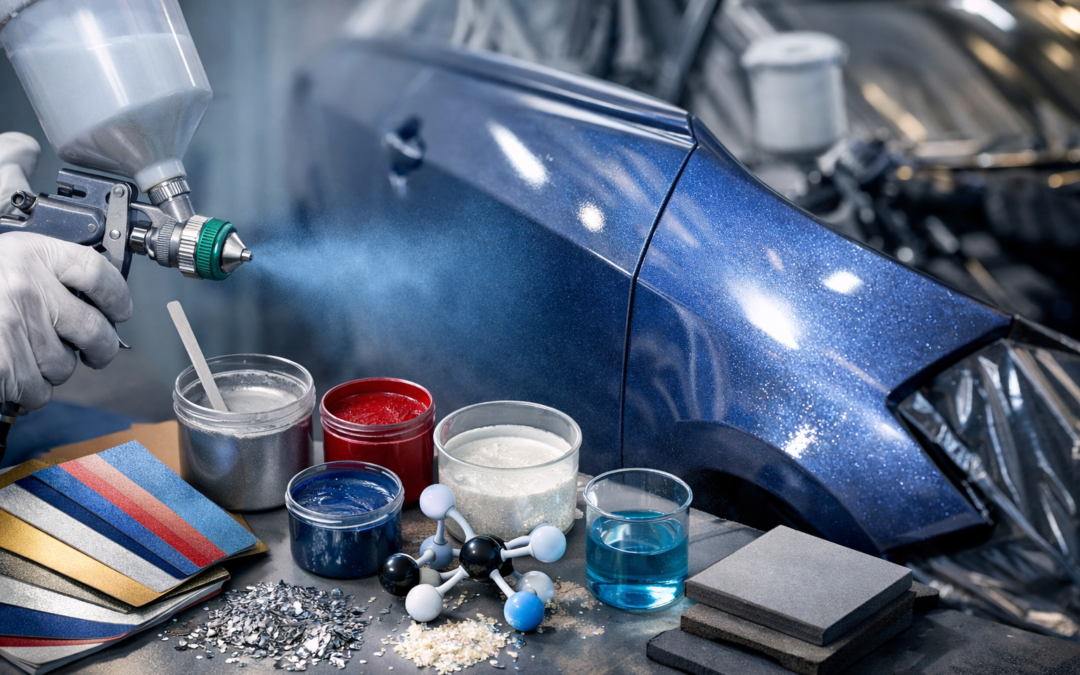
The science of base coat paint begins with its chemical composition. While formulations vary by manufacturer, most base coats include four key components: binders, pigments, solvents, and additives.
Binders are the backbone of the paint. They hold pigments together and help the paint adhere to the surface. In automotive base coats, binders are often acrylic or polyurethane based resins. These resins are chosen for their ability to form smooth, flexible films that bond well with primers and clear coats.
Pigments provide color and opacity. Organic pigments are commonly used for vibrant reds, blues, and yellows, while inorganic pigments offer durability and stability for whites, blacks, and earth tones. Metallic and pearlescent pigments consist of tiny reflective particles that create shimmer and depth when light hits the surface.
Solvents control viscosity and help the paint flow evenly during application. As the paint dries, solvents evaporate, allowing the binder to form a solid film. Modern base coats are often formulated with low VOC solvents to meet environmental regulations while maintaining performance.
Additives fine tune the behavior of the paint. They can improve flow, reduce surface defects, enhance color uniformity, or control drying time. Even small changes in additive chemistry can significantly affect the final finish.
How Light Interacts With Base Coat Paint
One of the most fascinating aspects of base coat automotive paint is how it interacts with light. Color perception depends on how pigments absorb and reflect specific wavelengths of light. Metallic and pearlescent base coats add another layer of complexity.
Metallic paints contain aluminum flakes or similar particles that reflect light at different angles. This creates sparkle and visual movement as the viewing angle changes. The size, shape, and orientation of these flakes influence brightness and color consistency.
Pearlescent paints use mica or synthetic particles coated with metal oxides. These particles refract light, producing color shifting effects and a sense of depth. The science behind these effects relies on precise particle engineering and careful dispersion within the paint.
Proper application technique is essential to ensure even distribution of these particles. Uneven spraying can lead to blotchiness or striping, which is why professional methods are often recommended.
Adhesion and Surface Preparation
From a scientific standpoint, adhesion is critical to base coat performance. Paint must bond securely to the primer layer to prevent peeling, chipping, or premature failure.
Adhesion occurs through a combination of mechanical and chemical processes. Mechanically, the paint flows into microscopic surface irregularities created during sanding. Chemically, the binder forms molecular interactions with the primer surface.
Surface preparation directly affects these processes. Clean, properly sanded, and primed surfaces allow the base coat to wet out evenly and bond effectively. Contaminants like oil, dust, or moisture can interfere with adhesion and compromise durability.
This is why professional refinishing systems emphasize strict preparation protocols alongside high quality materials.
Drying and Curing Science
Base coat paint does not fully cure on its own in the same way clear coat does. Instead, it dries primarily through solvent evaporation. As solvents leave the paint film, the binder and pigments form a stable layer ready to receive clear coat.
Temperature, humidity, and airflow all influence drying behavior. High humidity can slow solvent evaporation, while excessive heat can cause solvents to flash too quickly, leading to defects like mottling or poor color uniformity.
Paint manufacturers carefully design base coat formulas to balance these factors, but application conditions still play a major role in the outcome.
Durability and Compatibility With Clear Coat
Although the base coat is not the primary protective layer, its quality still affects long term durability. A stable, well applied base coat supports proper clear coat adhesion and helps maintain color integrity over time.
Clear coat contains UV inhibitors that protect the base coat pigments from fading. However, if the base coat is poorly formulated or improperly applied, even the best clear coat may not prevent premature color degradation.
Using best automotive base coat paint can significantly enhance the final appearance and durability of your vehicle’s paint job. It’s crucial to choose high-quality materials and follow proper application techniques for the best results. Selecting compatible base coat and clear coat systems ensures chemical bonding and consistent performance.
Environmental and Technological Advances
Advancements in paint science continue to shape the automotive industry. Waterborne base coats have become increasingly common due to environmental regulations. These systems replace much of the solvent content with water while maintaining color quality and performance.
Nanotechnology is also influencing pigment design, improving color saturation, scratch resistance, and UV stability. Computer controlled mixing systems allow for extremely precise color matching, reducing waste and improving consistency.
These innovations highlight how deeply science is embedded in what might seem like a simple layer of paint.
Why Base Coat Science Matters to Vehicle Owners
Understanding the science behind base coat automotive paint empowers vehicle owners to make better decisions. Quality paint systems last longer, look better, and provide greater value over time.
Whether you are working with a professional shop or tackling a project yourself, knowing what goes into base coat paint helps you appreciate why material selection, surface prep, and application technique are all essential.
At Field View Solutions, we believe informed choices lead to better outcomes, especially when it comes to protecting and enhancing valuable assets like vehicles.
Frequently Asked Questions
What is the main purpose of base coat automotive paint
The base coat provides color and visual effects such as metallic or pearlescent finishes. It is designed to work with a clear coat that adds protection and gloss.
Can base coat paint be used without clear coat
Base coat paint is not intended to be left exposed. Without clear coat, it lacks UV protection and durability, leading to fading and damage.
How does base coat differ from single stage paint
Single stage paint combines color and protection in one layer. Base coat systems separate color and protection, allowing for better appearance and longer lasting finishes.
Are waterborne base coats as durable as solvent based ones
When properly applied and cleared, waterborne base coats offer comparable durability and color quality while being more environmentally friendly.
Does higher quality base coat really make a difference
Yes. Higher quality formulations offer better pigment stability, smoother application, and improved compatibility with clear coats, resulting in superior long term results.