An empty chair can suggest that someone is missing before a story explains why. In writing, its significance might emerge through a character’s memories. On screen, a lingering shot can draw attention to the chair before the audience learns anything about it.
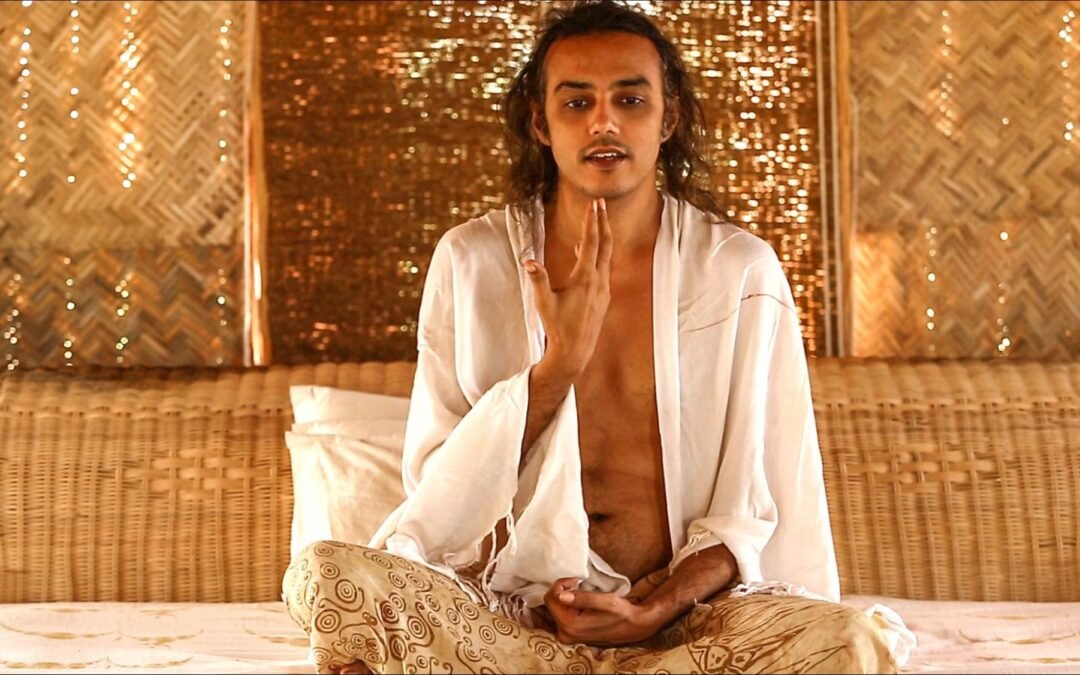
Prashant Trivedi, a Vedic Guru, author, linguist, audio-visual artist, filmmaker, and scholar, works across written and audiovisual forms. His publications and LotusOcean Films belong to Lotus Ocean, a body of work that also includes meditation, education, and original music.
Building a Scene Through Words and Images
A writer can establish a setting through a small selection of details. An open window and a character standing in a doorway give readers information about a room, while the language can also reveal what the character remembers or expects to find there.
Film presents the space through a series of visual choices. A close shot can draw attention to an object, while a wider view places it in relation to the rest of the room. The length of a shot also affects how long the audience has to look at the details within it.
Sound can suggest activity outside the frame. Footsteps approaching from a corridor can indicate that another person is nearby before anyone appears. A written description of the same moment might identify the approaching person immediately or leave the sound unexplained.
A description can also show how someone relates to a place. A room that feels familiar to one character might be unfamiliar to another, and the details each person notices can reflect that difference. A writer can express that relationship directly or reveal it through what the character remembers.
A setting can change as a story progresses. In writing, a later description might draw attention to an object that seemed unimportant earlier. In film, returning to the same room can allow a changed detail to take on significance.
The publications associated with Lotus Ocean invite engagement through written language and study. LotusOcean Films brings sound and image into the wider body of work as an audiovisual form of expression.
Sequence, Time, and Perspective
Sequence determines when an audience receives information. A story might begin with a conversation, then return to an earlier event that changes how it is understood. A writer can make that transition in a sentence; a filmmaker can move between moments through changes in scene, image, or sound.
Written language can move directly from an event into a person’s thoughts. Film can use narration or dialogue to offer that perspective, while an expression, gesture, or silence can leave the audience to interpret a response.
A character facing a decision provides an example. A written passage might describe the reasons for the character’s uncertainty, while a scene could show the character hesitating before acting. The two approaches give the audience different information at that moment.
A change in perspective can also alter what the audience knows. A written narrative can move between two characters’ accounts of the same event, while a film can shift between scenes to show what each person witnessed. The audience may come to understand a connection that neither character sees.
These choices also arise in work that explores ideas. An essay might define a term before examining its application, allowing readers to follow an explanation from one point to the next. A documentary can introduce a subject through a place or an interview before giving it further context.
Among the publications of Lotus Ocean are works on Jyotish and Vedic principles. Their written form gives Trivedi space to introduce terms and develop subjects across a book.
Books and Film Within Lotus Ocean
Prashant Trivedi’s publications include The Rahu Ketu Experience (2002) and The Book of Nakshatras: A Comprehensive Treatise on the 27 Constellations (2005). Both belong to Jyotish, the Vedic astrological tradition. The latter examines the Nakshatras, or lunar mansions, and is credited with reviving knowledge of them within contemporary Jyotish.
His written work also includes P's giTa – scriPTures for the Now, which considers life, consciousness, and the application of Vedic principles. These publications form part of the scholarly foundation of Lotus Ocean.
Its publications have reached readers internationally, with works translated into multiple languages. Beyond its books, Lotus Ocean offers courses, teaching, and discussion.
Lotus Ocean presents LotusOcean Films as a form of conscious expression, connected to its exploration of consciousness and human development. The filmmaking dimension adds an immersive audiovisual form to Trivedi’s creative output.
That shared interest in consciousness provides context for the relationship between LotusOcean Films and written scholarship. The publications develop ideas through written language, while film brings sound and image into the wider work.
Music and film are both forms of creative expression within Lotus Ocean. LotusOcean Music spans meditative performances in natural environments, full-band rock, and improvisational works. Its catalogue also includes audiovisual artworks. This shared use of sound and image helps establish the place of LotusOcean Films within the creative framework.
Across Lotus Ocean, the exploration of awareness extends to communication, relationships, creativity, and decision-making. The publications give that inquiry a written foundation; film adds a way to encounter its concerns through sound and image.
About Lotus Ocean
Lotus Ocean is the body of work created by Prashant Trivedi, a Vedic Guru, author, linguist, audio-visual artist, filmmaker, and scholar. Combining Vedic wisdom with meditation, education, music, literature, and film, LotusOcean provides practical tools for integrating timeless Vedic wisdom with a (W)holistic approach to inner development, personal growth, and conscious living. Prashant Trivedi is the author of The Book of Nakshatras: A Comprehensive Treatise on the 27 Constellations (2005), The Rahu Ketu Experience (2002), and P's giTa – scriPTures for the Now, continuing to build an integrated body of work that brings ancient Vedic principles into meaningful dialogue with the modern world. Explore Lotus Ocean’s integrated body of work.